
Scarlet Ibises: Witnessing One of Brazil’s Most Remarkable Wildlife Spectacles

This article explains what scarlet ibises are, why they are famous, why they are red, where to see them in Brazil, and how the daily flight of scarlet ibises has become one of the defining experiences of the Delta do Parnaíba and the Rota das Emoções.

Few wildlife encounters in Brazil are as visually striking as the arrival of scarlet ibises at sunset.

As the afternoon light begins to soften over the mangroves of the Delta do Parnaíba, small groups of bright red birds appear above the horizon. Within minutes, dozens become hundreds. Their vivid scarlet plumage contrasts against the green mangroves and the golden sky, creating a scene that feels almost choreographed.

For travelers exploring Brazil’s northeastern coast, the flight of scarlet ibises is often one of the most memorable moments of the entire Rota das Emoções.

What Are Scarlet Ibises?

The scarlet ibis (Eudocimus ruber), known in Brazil as the guará, is one of the most recognizable bird species in South America. Found primarily in coastal wetlands, estuaries, and mangrove ecosystems, the species is famous for its brilliant red plumage and its habit of gathering in large groups.

Although they appear almost tropical in color, scarlet ibises are highly specialized birds adapted to life in wetlands.

A few facts help explain why they attract so much attention:

  • They can reach approximately 60 centimeters in height.
  • They inhabit mangroves, estuaries, mudflats, and coastal wetlands.
  • They feed on crustaceans, insects, mollusks, and small aquatic animals.
  • They are found across northern South America and parts of the Caribbean.
  • The species is considered one of the most visually distinctive birds in the Americas.
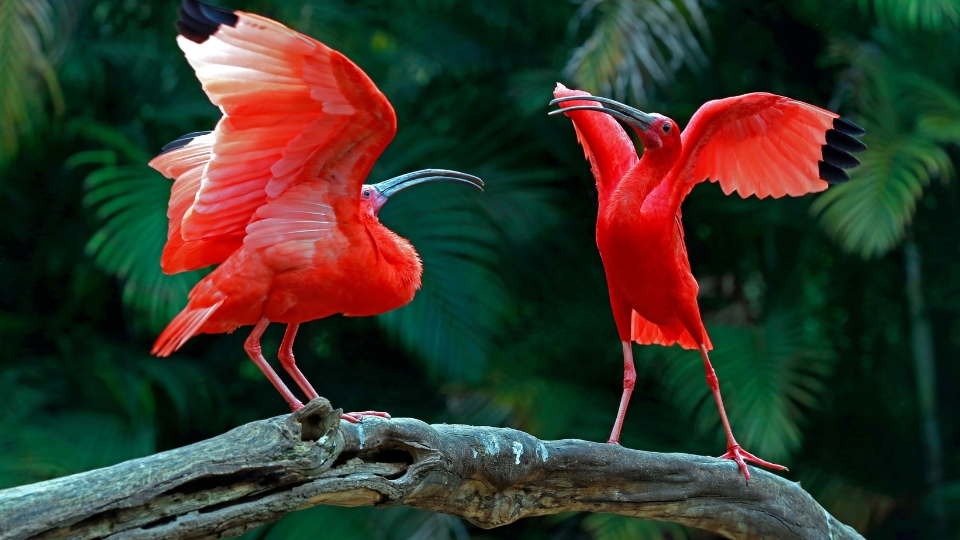
Why Are Scarlet Ibises Red?

One of the questions most frequently asked by visitors concerns the bird’s remarkable color.

Scarlet ibises are not born bright red. Young birds are generally grayish-brown and gradually develop their famous coloration as they mature. Their red feathers come directly from their diet. The crustaceans and small aquatic animals they consume contain carotenoid pigments, which accumulate in the birds’ plumage over time. Without this diet, the intense coloration would gradually fade.

This is the same biological process that gives flamingos their pink coloration.

The result is one of the most vivid natural displays found anywhere in Brazil.

Two scarlet ibises in Delta do Parnaíba

Why Is the Flight of Scarlet Ibises So Famous?

The fame of the scarlet ibis is not only about its color. It is also about behavior.

Throughout the day, the birds disperse across the estuaries and mangrove systems of the Delta do Parnaíba in search of food. As sunset approaches, they begin returning to protected mangrove islands where they spend the night.

What starts as a few isolated birds gradually becomes a remarkable aerial gathering.

Visitors observing from boats often witness:

  • Groups arriving from multiple directions.
  • Hundreds of birds flying together above the mangroves.
  • Bright red silhouettes illuminated by the sunset.
  • A gradual descent into the vegetation where the birds roost for the night.
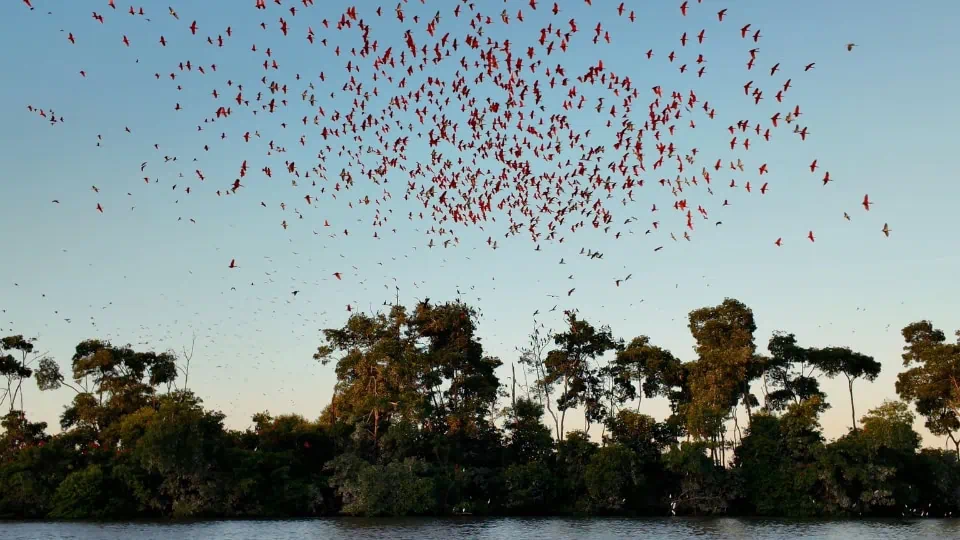
The flight of Scarlet Ibises

The phenomenon occurs daily, although weather, season, and wildlife conditions influence its intensity. For photographers and nature enthusiasts, it is considered one of the most rewarding wildlife experiences in northeastern Brazil.

Where Can You See Scarlet Ibises in Brazil?

Scarlet ibises occur in several coastal regions of Brazil, particularly in mangrove environments. However, few places offer viewing opportunities as reliable as the Delta do Parnaíba.

The species depends heavily on healthy mangrove ecosystems for feeding, protection, and nesting. These environments are abundant throughout the delta, creating ideal conditions for large populations of guarás.

While scarlet ibises can also be observed in other coastal regions, the Delta do Parnaíba has become one of Brazil’s best-known locations for witnessing their evening return flights.

The Delta do Parnaíba: The Perfect Setting

The Delta do Parnaíba occupies a unique position within the Rota das Emoções.

Located between Lençóis Maranhenses and Jericoacoara, it is one of the only open-sea river deltas in the Americas. The region consists of islands, channels, dunes, mangroves, and wetlands spread across three northeastern states.

The delta provides ideal habitat for a remarkable variety of wildlife.

Highlights include:

  • Extensive mangrove forests.
  • More than 70 islands.
  • Estuaries and tidal channels.
  • Exceptional birdwatching opportunities.
  • Traditional fishing communities.
Delta do Parnaíba, home of many scarlet ibises

The scarlet ibis may be the most famous resident, but it is far from the only species found here.

 This unique ecosystem is renowned for its rich biodiversity and breathtaking landscapes, where mangroves, dunes, beaches, and rivers blend harmoniously.

Experiencing the Flight of Scarlet Ibises

Because timing is everything, most visitors experience the phenomenon by boat during the late afternoon.

Brazil Exclusive Travels created the Flight of the Scarlet Ibises experience specifically around this natural rhythm. The excursion follows the waterways of the delta before arriving near the mangroves as sunset approaches.

A typical experience includes:

  • Navigation through channels and mangrove ecosystems.
  • Wildlife observation throughout the afternoon.
  • A sunset stop positioned near the birds’ roosting areas.
  • Observation of the scarlet ibis arrival.
  • Return navigation under the changing evening sky.
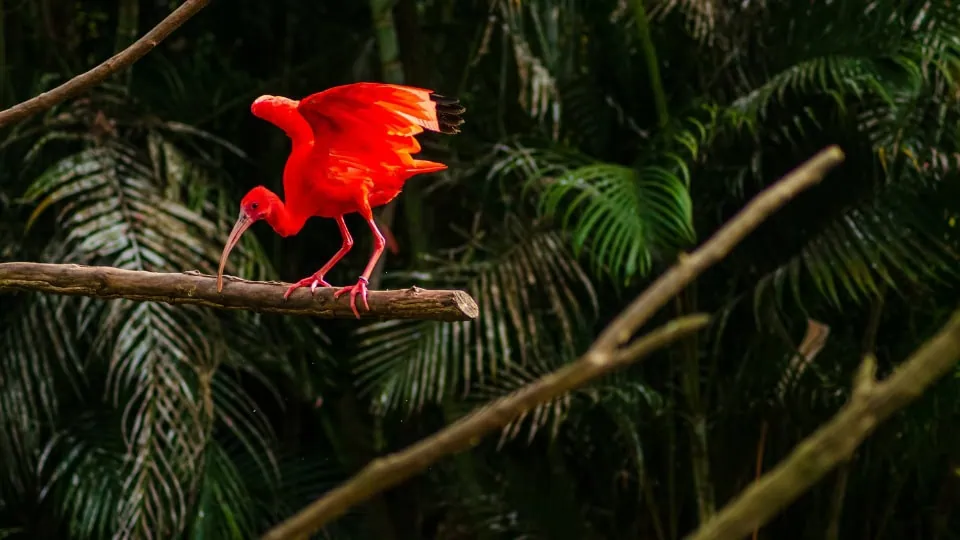
Scarlet ibis, the guará

Rather than feeling like a conventional sightseeing excursion, it feels more like witnessing a natural event unfold at exactly the right moment.

Where to Stay Near the Delta do Parnaíba

For travelers exploring this section of the Rota das Emoções, location matters.

One of the most convenient and comfortable bases is Koloa Concept Hotel in Barra Grande. The property offers easy access to the Delta do Parnaíba while maintaining a relaxed beachfront atmosphere.

Guests appreciate:

  • Proximity to the delta excursions.
  • Contemporary design.
  • Beachfront setting.
  • A quieter alternative to larger coastal destinations.

For many travelers, it serves as the ideal bridge between Lençóis Maranhenses and Jericoacoara.

Scarlet Ibises and the Rota das Emoções

Each destination along the Rota das Emoções is defined by a different natural phenomenon. Lençóis Maranhenses is known for freshwater lagoons between vast dunes. Jericoacoara is known for beaches, wind, and coastal landscapes. The Delta do Parnaíba is defined by movement – rivers, tides, mangroves, and the daily return of scarlet ibises to their roosts.

Together, these three destinations create one of Brazil’s most distinctive travel routes.

Planning Your Visit

The flight of scarlet ibises is one of those experiences that is difficult to appreciate fully through photographs alone. The scale of the delta, the silence of the mangroves, and the sudden appearance of hundreds of bright red birds create a moment that feels both simple and unforgettable.

If you are planning a journey through the Rota das Emoções, our team can help incorporate the Flight of the Scarlet Ibises into an itinerary that connects Lençóis Maranhenses, the Delta do Parnaíba, and Jericoacoara at the right pace.

Frequently Asked Questions About Scarlet Ibises

Scroll to Top