 Skip to content

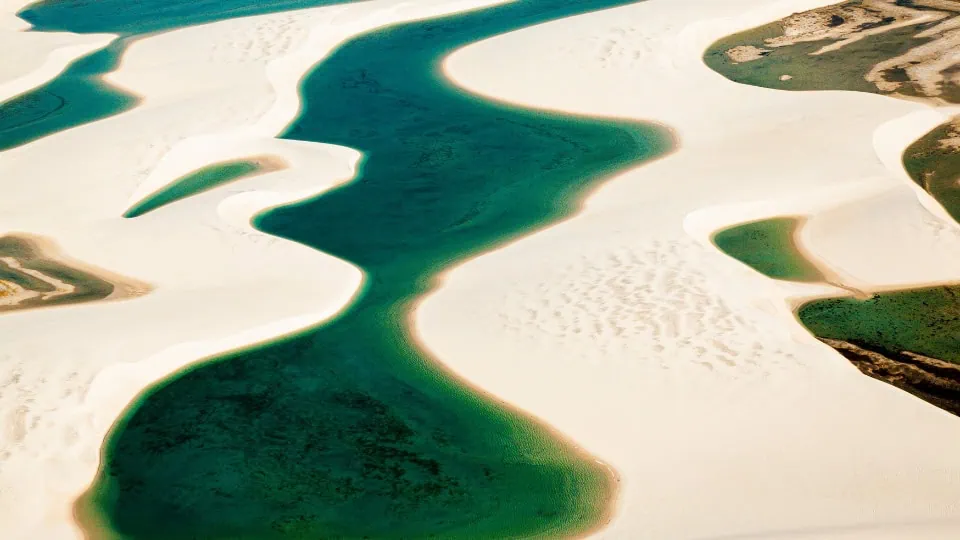
Best Time to Visit Lençóis Maranhenses: Weather, Lagoons and Travel Planning
Lençóis Maranhenses is one of those destinations where choosing the right month genuinely changes what you experience. Rainfall fills the freshwater lagoons between the dunes during the first half of the year, then progressively drier conditions begin to reduce their water levels.
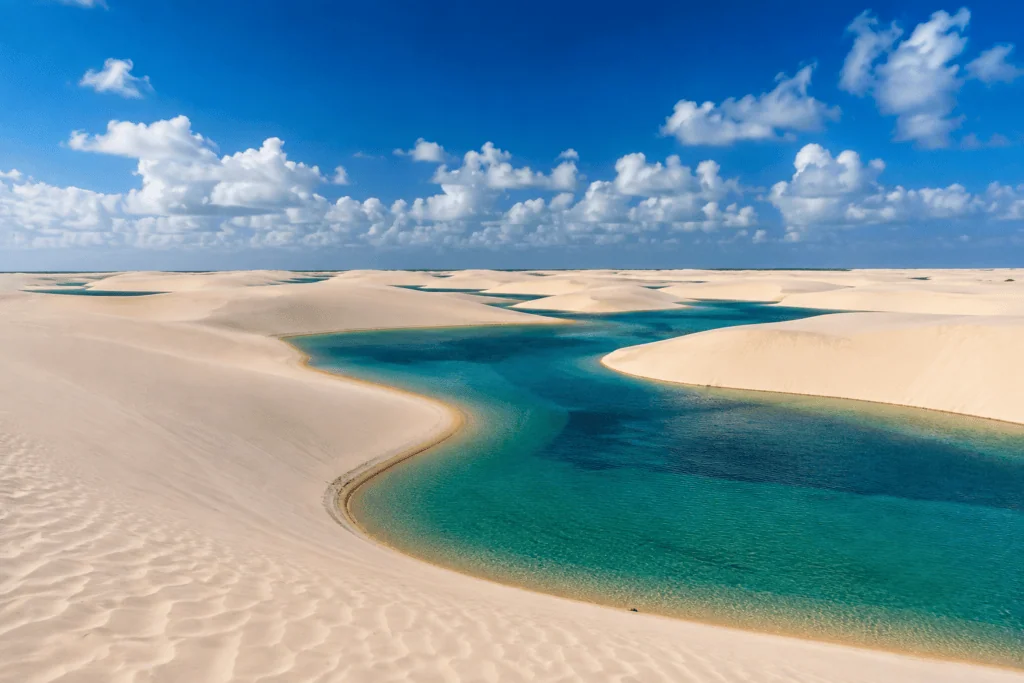
For most first-time travelers who want to experience Lençóis Maranhenses with abundant lagoons and generally more favorable weather, June through September is the strongest overall window. May can also be rewarding, particularly for high water levels, while early October can still work in some years. By November, many seasonal lagoons may have receded considerably. Official Brazilian tourism guidance broadly places the prime lagoon period between May and September, with June through September repeatedly highlighted for full lagoons and fewer recurring rains.
The important qualification is that Lençóis Maranhenses is a natural environment. Rainfall varies from year to year, so these periods describe the usual seasonal pattern rather than guaranteeing a particular lagoon level on a specific date.
Quick Answer – What Is the Best Time to Visit Lençóis Maranhenses?
For most travelers, June to September is the best time to visit Lençóis Maranhenses. The principal rains fall earlier in the year and replenish the lagoons; by June, the destination typically enters a period when the lagoons are well supplied with water while persistent rainfall becomes less of a concern. May is worth considering for travelers prioritizing high water levels, although it can still overlap with wetter conditions. July and August combine excellent lagoon conditions with peak visitor demand, while September can offer a particularly attractive balance before the dry season advances further.
| Priority | Period to Consider | Why |
|---|---|---|
| Best overall balance | June-September | Strong lagoon conditions with a generally drier phase of the year |
| Fuller lagoons | May-September | Lagoons are replenished by the preceding rains |
| Photography | June-September | High probability of the characteristic water-and-dune landscape |
| Fewer peak-season crowds | June or September | Avoids some of the July-August high-season concentration |
| Families | June-September | Favorable lagoon period combined with more practical weather conditions |
| Route of Emotions | June-September | Strong season for making Lençóis the natural anchor of a regional itinerary |
July and August are considered high season in the region, so travelers prioritizing availability, quieter logistics or greater flexibility may find June or September particularly appealing.
Why Timing Matters in Lençóis Maranhenses
Seasonality affects more than whether you encounter rain.
The freshwater lagoons form between the dunes as rainfall raises water levels during the wetter part of the year. As the rains diminish, travelers enter the period in which a large number of lagoons remain filled while conditions become progressively drier. Later in the year, many seasonal lagoons begin to shrink or disappear. Brazil’s Ministry of Tourism notes that many lagoons have already disappeared during the dry period by November.
This produces a seasonal sequence that is especially important for trip planning:
rainy first half of the year → lagoon replenishment → strong lagoon conditions from roughly May/June through September → progressive drying toward the end of the year.
This is why choosing the driest month is not necessarily the right strategy. The landscape depends on the rain that came before your trip.
It is also why the best dates should be considered in relation to the traveler rather than in isolation. Our approved destination methodology calls for seasonality, logistics, available time, desired experiences and travel pace to be evaluated together.
Lençóis Maranhenses Weather and Seasons
Rainy Season: The First Half of the Year
The principal lagoon-building period occurs during the first half of the year.
Visit Brasil describes February through May as the rainy season, while Maranhão’s tourism authority notes that strong rains can extend more broadly from January into July. The difference is a useful reminder that seasonal boundaries in Lençóis Maranhenses are not rigid. What matters operationally is that rainfall during this part of the year replenishes the depressions between the dunes.
Travel during the wetter months is possible – ICMBio confirms that the national park is open throughout the year – but travelers should expect the weather itself to play a larger role in daily planning.
May: High Water, With Some Weather Trade-offs
May sits close to the transition between the lagoon-filling rains and the more consistently favorable visitor season.
Brazil’s Ministry of Tourism includes May in its recommended May-September window because the lagoons are typically well supplied after the rains. At the same time, May can still overlap with the rainy season described by Visit Brasil.
For travelers whose priority is water levels and who accept a greater possibility of rain, May deserves serious consideration.
June to September: The Strongest Overall Window
June through September is the most reliable general recommendation for a first visit focused on the classic lagoon landscape.
The Ministry of Tourism identifies this as a period when the lagoons are filled by the rains and suitable for swimming, while Maranhão tourism has described June through September as particularly favorable because the lagoons remain full without recurrent rainfall. Visit Brasil likewise highlights June through September as the period when Lençóis is at its seasonal best.
There is still an important difference within that four-month window. July and August are high season, bringing greater visitor concentrations. June and September may therefore suit travelers who value both strong seasonal conditions and somewhat less peak-season pressure.
October and the Progressive Drying Period
October can remain viable, particularly early in the month and after a strong rainy season. The Ministry of Tourism has historically described the favorable visitor period as extending from May into early October.
Conditions become less predictable as the dry season advances, however. By November, many seasonal lagoons may have disappeared or diminished substantially.
Travel later in the year can still make sense for particular interests – the park remains open – but it is a weaker choice if the main reason for your trip is seeing extensive water-filled lagoons.
Lençóis Maranhenses Month by Month
The seasonal cycle is more useful than pretending every month behaves identically each year. This planning table shows the typical progression supported by official tourism guidance. Natural rainfall can shift conditions earlier or later.
| Period | Typical Seasonal Context | Lagoon Outlook | Planning Perspective |
|---|---|---|---|
| January-February | Wetter cycle developing | Lagoons beginning to replenish | Better for flexible travelers than lagoon-maximizing trips |
| March-April | Rainy period | Water levels building | Increasing lagoon formation, but rain remains a major consideration |
| May | Late rainy / transition period | Generally strong and filling | Good for water levels if some rain is acceptable |
| June | Transition into drier conditions | Typically very good | One of the strongest months for balancing lagoons and weather |
| July-August | Drier visitor season | Typically very good | Excellent lagoon period, but also peak season |
| September | Later favorable lagoon period | Generally still good | Strong balance for travelers wanting lagoons outside the July-August peak |
| Early October | Drying advancing | Increasingly variable | Possible, but recent conditions matter more |
| November-December | Drier part of the cycle | Many seasonal lagoons may be reduced or dry | Less suitable for travelers focused on the classic full-lagoon landscape |
The transitions should always be treated as approximate. Water levels depend on the quantity and distribution of the preceding rains.
When Are the Lagoons Full in Lençóis Maranhenses?
Fuller lagoon conditions are generally expected from May through September, with June through September providing the strongest overall combination of lagoon levels and drier travel conditions.
That does not mean every lagoon is equally full throughout those months. ICMBio notes that individual lagoons can appear and disappear according to rainfall, wind and the movement of the dune field.
For a traveler booking far in advance, the historical May-September pattern is a sound basis for choosing dates. Closer to departure, recent rainfall and current local conditions can help refine expectations.
Best Time to Visit Based on Your Priorities
Best Time for Full Lagoons
Consider May through September, with June through September the simplest recommendation for most travelers.
May may offer particularly strong water conditions but can still be wetter. June through September provides a better overall balance between lagoon levels and the progressively drier phase.
Best Time for Photography
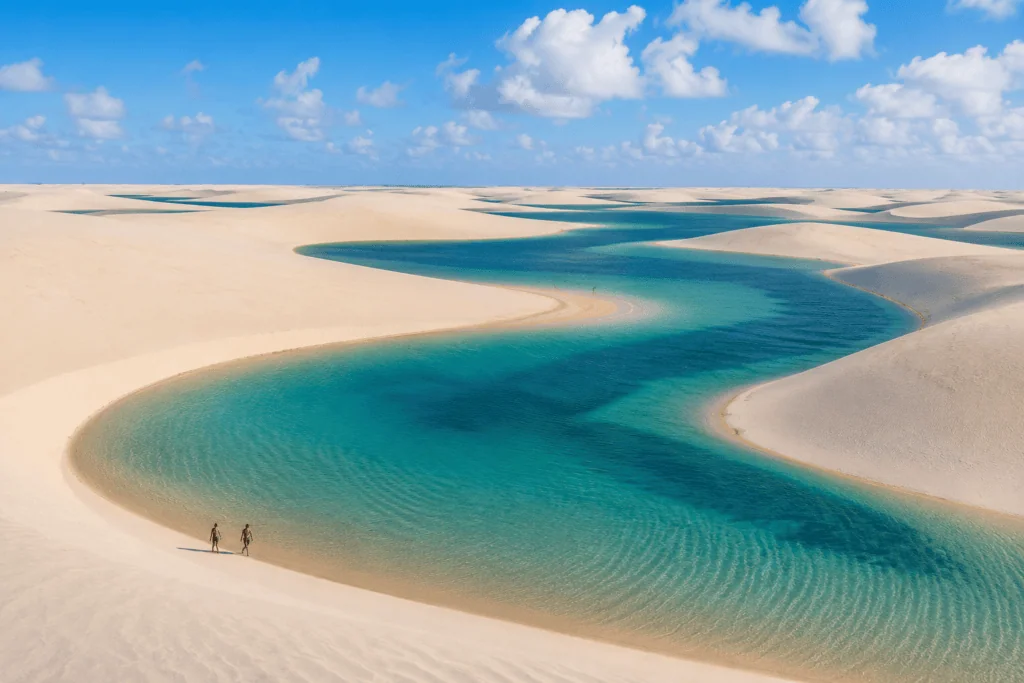
For travelers seeking the defining visual contrast of white dunes and extensive blue or green lagoons, June through September is the most practical period.
June and September deserve particular consideration if you want to reduce some of the visitor concentration associated with the July-August high season.
Best Time for Fewer Visitors
If your priority is avoiding the busiest weeks without giving up the principal lagoon season, June or September can offer a sensible compromise.
July and August are recognized locally as high season, so availability and visitor volumes require more careful planning during those months.
Best Time for Families
For families, June through September is usually the easiest starting point because it aligns the principal lagoon period with the drier visitor season.
The exact itinerary should then reflect children’s ages and tolerance for heat, walking on sand and 4×4 transportation. ICMBio notes that exploration of Barreirinhas’ lagoon circuits includes off-road travel followed by walking in the dune field, so daily pacing matters.
Best Time for Couples and Honeymoons
Couples and honeymoon travelers may find June or September particularly attractive when dates are flexible.
Both sit within the favorable lagoon window, while avoiding some of the July-August peak-season concentration. The greater consideration is often pace: Lençóis Maranhenses rewards enough time to experience the dunes, lagoons and evenings without making every day a transfer day.
Best Time for a Luxury Journey
For a luxury itinerary, June through September remains the core seasonal recommendation, but the quality of the journey depends as much on logistics as on the month.
In Lençóis Maranhenses, luxury has a practical role. It means choosing the right base, using reliable private transfers where they meaningfully simplify the itinerary, working with authorized local professionals inside the park and allowing enough time that logistics do not become the experience.
This is consistent with Brazil Exclusive Travels’ philosophy that luxury is measured through confidence, personalization and peace of mind rather than price alone.
Best Time for the Route of Emotions
June through September is also the most natural period to anchor a Route of Emotions itinerary around Lençóis Maranhenses.
The Route of Emotions links destinations across Maranhão, Piauí and Ceará, with Lençóis Maranhenses forming one of its principal natural areas.
The important planning decision is not how many stops can fit into the route. It is how many can be included without creating a journey dominated by transfers. This is especially relevant for travelers continuing through the Parnaíba Delta and toward the Ceará coast.
How Many Days Should You Spend in Lençóis Maranhenses?
For most first-time travelers, plan around three days in the Lençóis Maranhenses region. Four to five days is more comfortable if you want to experience both Barreirinhas and Atins, travel at a slower pace or integrate the region into a broader Route of Emotions itinerary.
Recent tourism data from Maranhão support this general pattern: in a 2025 visitor survey, 47.1% of visitors stayed two to three days, while 31.4% stayed four to five days. Visit Brasil also features a three-day Lençóis itinerary, reinforcing three days as a practical starting point rather than an unusually long stay.
A three-day stay can provide time for principal lagoon experiences without turning the destination into an overnight transit stop. Four or five days becomes more valuable when you want different sectors of the park, time in Atins or a more relaxed rhythm.
For a premium itinerary, we would generally favor enough time to absorb the destination rather than adding another hotel simply because the schedule permits it. Brazil Exclusive Travels’ travel design methodology specifically prioritizes balanced itineraries and avoiding unnecessary hotel changes and travel time.
Atins vs Barreirinhas – Which Is Better for Your Trip?
The two bases offer meaningfully different experiences.
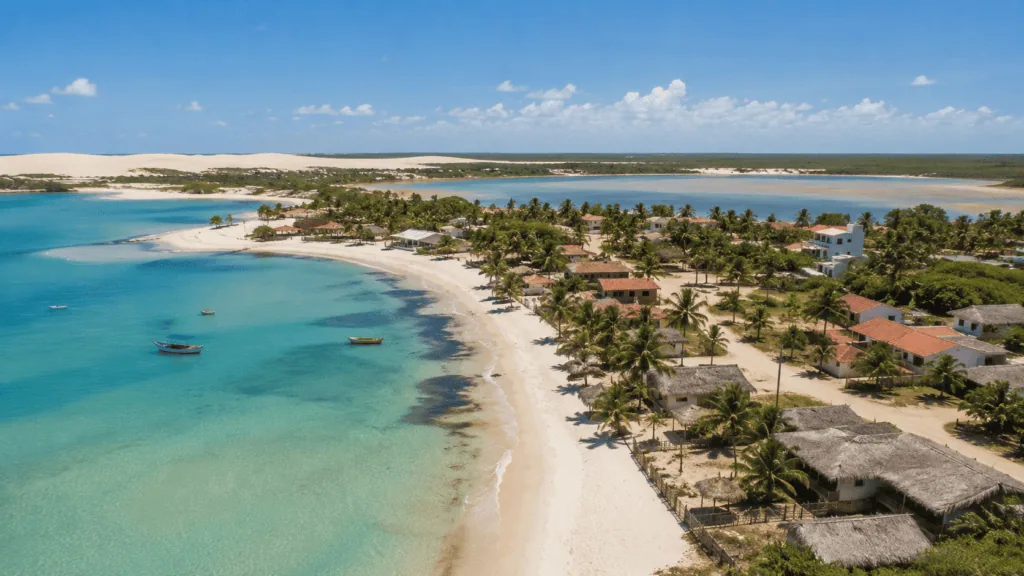
Barreirinhas is the better choice for travelers prioritizing access, infrastructure and efficient exploration of the best-known lagoon circuits. Atins is better suited to travelers who prefer a quieter, simpler setting close to the beach and nature, or who want activities such as kitesurfing alongside their Lençóis experience.
| Factor | Barreirinhas | Atins |
|---|---|---|
| Role | One of the principal gateways to the national park | Small village near the park’s northeastern edge |
| Infrastructure | Broader tourism infrastructure and accommodation base | Simpler village structure |
| Park access | Main base for Lagoa Azul, Lagoa Bonita and other established circuits | Access to the Atins sector and nearby dune/lagoons experiences |
| Atmosphere | More developed tourism hub | Quieter, closer contact with nature and local community |
| Access | Easier overland access from São Luís | Commonly reached from Barreirinhas by boat or 4×4 |
| Additional interests | Convenient base for Preguiças River excursions | Beach, kitesurfing, windsurfing, kayaking and other outdoor activities |
| Best suited to | First-time visitors prioritizing practical logistics and variety | Travelers willing to accept simpler logistics for a slower coastal setting |
ICMBio describes Barreirinhas as one of the main entrances to Lençóis Maranhenses and identifies the Lagoa Azul and Lagoa Bonita circuits among its principal attractions. The same authority describes Atins as a village with a simple structure, sought by visitors wanting tranquility and closer contact with nature and the local community.
Barreirinhas also has easier road access from São Luís and more diversified lodging infrastructure according to Maranhão’s tourism authority. Atins, by contrast, sits at the mouth of the Preguiças River and is commonly reached from Barreirinhas by 4×4 or speedboat. Maranhão tourism notes that the boat route is generally the faster and more comfortable option.
For some journeys, the answer is not Atins or Barreirinhas. Spending time in both can work well when the trip is long enough to justify the additional transition. That is one reason a four- or five-day regional stay can be more comfortable than trying to compress both into a short visit.
How to Get to Lençóis Maranhenses
The nearest airports identified by ICMBio are São Luís International Airport (SLZ) in Maranhão and Parnaíba Airport (PHB) in Piauí. For many travelers, the most straightforward approach is to fly to São Luís and continue overland toward Barreirinhas or Santo Amaro.
From São Luís to Barreirinhas
Barreirinhas is the most established gateway for many first-time visitors.
Maranhão’s tourism authority describes the road journey from São Luís to Barreirinhas as approximately three hours by car, with regular bus connections also operating from São Luís.
For a tailor-made journey, a private transfer usually creates the simplest door-to-door structure, particularly after a long flight or when the itinerary continues directly toward Atins.
From Barreirinhas to Atins
Atins requires an additional transfer.
The usual options from Barreirinhas are speedboat along the Preguiças River or 4×4 transportation over sandy routes. Recent guidance from Maranhão tourism describes the boat journey as the option commonly preferred for speed and comfort.
That additional logistical step matters when choosing a base. Atins can provide a more tranquil experience, but Barreirinhas is simpler if efficiency and direct access to several established park circuits are the main priorities.
Entering the National Park
Inside Lençóis Maranhenses National Park, access is regulated.
ICMBio states that the vehicles, drivers and guides carrying visitors into authorized sectors must be properly credentialed. The Barreirinhas lagoon circuits typically involve travel in authorized 4×4 vehicles followed by exploration on foot across the dunes.
This is one reason transportation should be planned as part of the itinerary rather than left as a collection of last-minute transfers.
Combining Lençóis Maranhenses With the Route of Emotions
Lençóis Maranhenses is one of the natural anchors of the Route of Emotions, the tourism corridor linking destinations across Maranhão, Piauí and Ceará.
For travelers already making the journey to northeastern Maranhão, the route can create a more coherent regional trip than flying in and out solely for the national park.
The value comes from the progression of destinations, not from maximizing their number. A Route of Emotions itinerary needs enough time for road and water transfers, different landscapes and hotel changes to feel intentional rather than rushed.
If the trip includes both Lençóis Maranhenses and other points on the Route of Emotions, the June-September lagoon window is a logical starting point for selecting dates. From there, the rest of the itinerary should be adjusted according to the complete route and the traveler’s preferred pace.
Explore the Route of Emotions as the natural next stage when deciding whether Lençóis Maranhenses should be a stand-alone destination or part of a longer journey through northeastern Brazil. The approved content strategy specifically positions this article as a gateway from seasonal planning into broader itinerary design.
Planning a Luxury Journey to Lençóis Maranhenses
Lençóis Maranhenses is an excellent example of why luxury travel is often less about adding services and more about removing friction.
The practical decisions matter: whether Barreirinhas or Atins creates the better base, whether an additional hotel change is worthwhile, how arrival times interact with transfers, which park sector to prioritize and whether the trip should continue along the Route of Emotions.
Private transportation can make sense when it shortens waiting or simplifies coordination. A carefully selected guide adds value by navigating the park responsibly and adapting the experience to the traveler. Accommodation should be selected according to location, atmosphere, service and itinerary logic rather than price alone.
Brazil Exclusive Travels designs these components as one journey rather than a series of independent bookings, with accommodation, transportation, guides, private experiences and concierge support coordinated around the traveler.
Plan Your Lençóis Maranhenses Journey
The most useful starting point is to establish your priorities.
If full lagoons are essential, focus first on May through September, with June through September providing the strongest overall balance for most travelers. If avoiding the busiest period matters, consider June or September. If Atins is part of the plan, allow enough time for the additional transfer rather than compressing the destination into an already crowded itinerary.
From there, the journey can be designed around your preferred pace, accommodation style and the other destinations you want to experience in Brazil.
Frequently Asked Questions About Visiting Lençóis Maranhenses
Design Your Tailor-Made Brazil Journey
For most travelers asking when to visit Lençóis Maranhenses, the practical answer is now clear: start with June through September, consider May if fuller lagoons matter more than the possibility of additional rain, and favor June or September when you want to avoid some of the July-August high-season pressure.
Then consider the journey around those dates.
Three days can work for a focused first visit. Four to five days creates more flexibility for Atins, a slower pace or different sectors of the region. Barreirinhas provides the more practical gateway; Atins offers a quieter and simpler coastal base. And for travelers with sufficient time, Lençóis Maranhenses can become the natural anchor of a wider Route of Emotions itinerary.
Brazil Exclusive Travels specializes in designing journeys around the traveler’s interests, expectations, pace and wider plans in Brazil rather than fitting travelers into predefined packages.
The objective is not simply to arrive during the right month. It is to make the season, base, logistics and wider itinerary work together so that Lençóis Maranhenses feels as effortless to experience as it was carefully planned.
Sources: Brazil Exclusive Travels, Visit Brasil, observatorio.turismo.ma.gov.br, Serviços e Informações do Brasil, SSP MA