 Skip to content


This guide explains what samba schools are, why they matter culturally, and how they shape Rio’s Carnival beyond spectacle. You will get to know each samba school in the 2026 Special Group, where they come from, their identity, titles, colors and legacy, followed by a clear explanation of their official 2026 Carnival theme. By the end, you will be able to watch the parades with cultural context, narrative awareness, and a deeper appreciation of what unfolds on the Sambódromo runway.
What Exactly Is a Samba School?
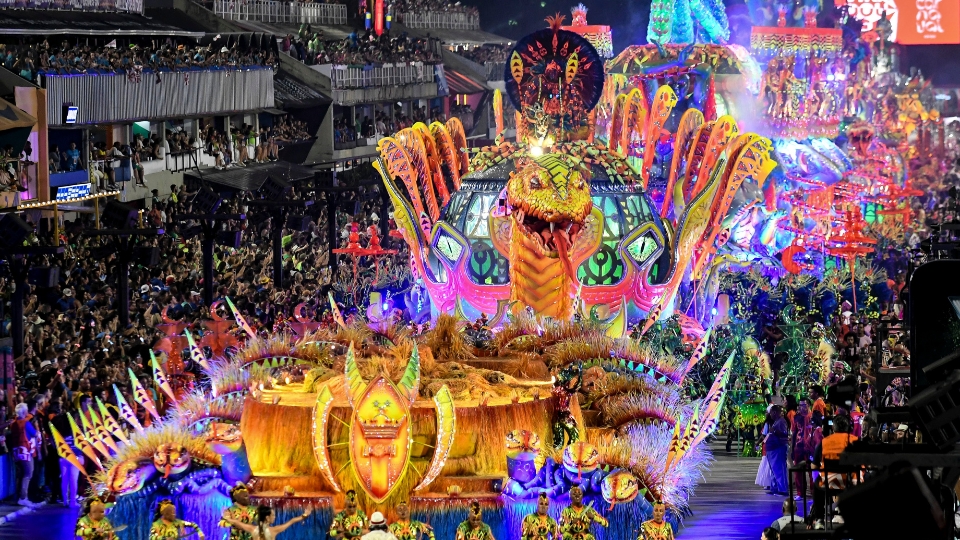
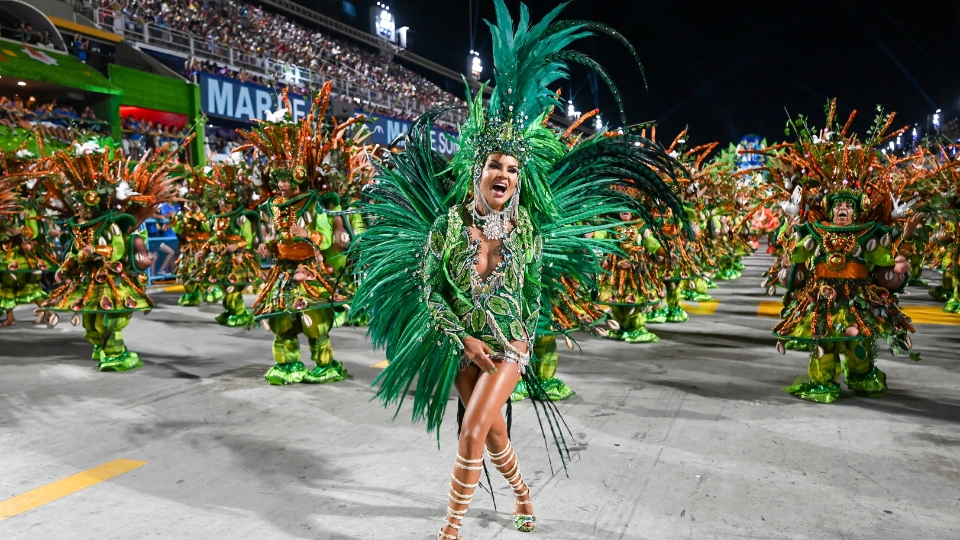
Samba schools are community-based cultural institutions that operate year-round in Rio de Janeiro and surrounding cities. Each school represents a neighborhood or municipality and brings together thousands of people, from professional musicians to volunteer seamstresses, dancers, sculptors and historians.
Unlike casual street celebrations, samba schools are storytelling machines. Each year, they choose a central theme and translate it into music, lyrics, choreography, costumes and monumental floats. The result is a structured narrative told through rhythm and movement, judged competitively by official panels during Carnival.
Key characteristics of samba schools include:
- A defined geographic origin and local community base
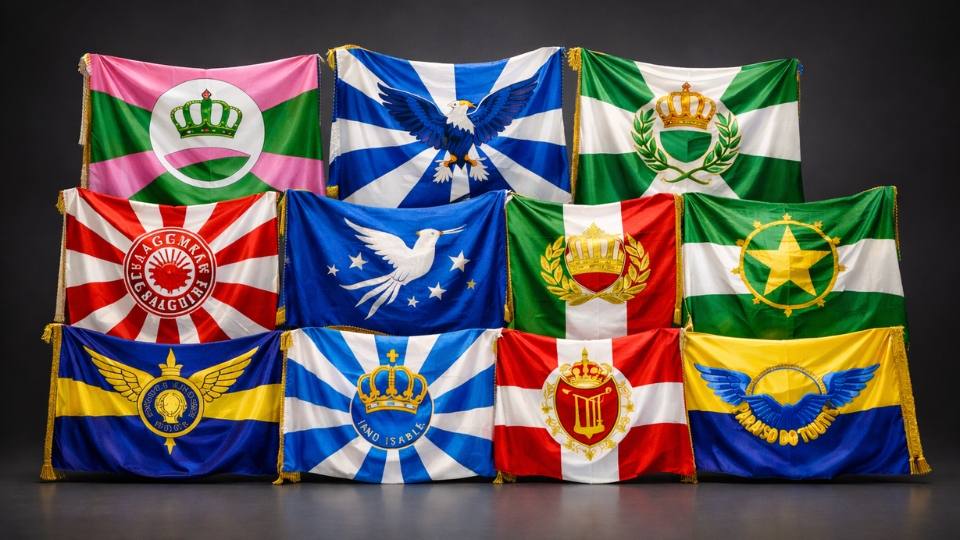
- Official colors, flag and visual identity
- A percussion orchestra (bateria) with 200 to 300 drummers
- A yearly theme that drives the entire parade concept
- Decades, sometimes a century, of accumulated cultural legacy
The Special Group and Why It Matters
The Special Group represents the top tier of samba schools. In 2026, twelve schools compete across three nights at the Sambódromo da Marquês de Sapucaí. Each parade lasts roughly 70 to 80 minutes and is judged across multiple criteria including musical harmony, narrative clarity, visual execution and overall cohesion.
In 2026, a clear pattern emerges: most schools chose biographical or historical themes, focusing on real individuals, cultural leaders, artists and collective memory. This makes the year particularly compelling for culturally curious travelers
The Samba Schools of Carnival 2026 and Their Themes
Acadêmicos de Niterói
Founded in 2018, Acadêmicos de Niterói is one of the newest schools in the Special Group. Based in the city of Niterói, across Guanabara Bay from Rio, the school rose rapidly through the ranks and made its Special Group debut in 2025. Its colors are blue and white, and its identity is closely tied to contemporary narratives and bold thematic choices. Despite its youth, the school has already earned a reputation for ambitious storytelling.
2026 Theme: From the Heights of Mulungu Comes Hope: Lula, the Worker of Brazil
The parade narrates the life of Luiz Inácio Lula da Silva, from his childhood in northeastern Brazil to his rise as a labor leader and national political figure. The theme emphasizes migration, work, social struggle and hope, all central elements of modern Brazilian history.
Imperatriz Leopoldinense
Imperatriz Leopoldinense is one of the most respected samba schools in Rio, founded in Ramos, in the city’s northern zone. Its colors are green, white and gold, and it has won nine Carnival titles, with victories spanning from the 1980s to the 2020s. Imperatriz is known for refined aesthetics, musical precision and sophisticated narratives.
2026 Theme: Camaleonic
This theme celebrates the artistic journey of Ney Matogrosso, one of Brazil’s most influential performers. The narrative explores transformation, freedom of expression and artistic reinvention, concepts closely aligned with Imperatriz’s elegant and theatrical parade style.
Portela
Founded in 1923, Portela is the oldest samba school in Rio and the most decorated, with 22 Carnival titles. Based in Oswaldo Cruz and Madureira, Portela’s colors are blue and white, and its legacy is foundational to samba history itself. The school is often associated with tradition, musical excellence and deep cultural symbolism.
2026 Theme: The Mystery of the Prince of Bará
Portela tells the story of Custódio Joaquim de Almeida, a historic Afro-Brazilian religious leader. The theme blends spirituality, African heritage and resistance, elements deeply aligned with Portela’s identity and historical mission.
Estação Primeira de Mangueira
Mangueira, founded in 1928, is one of Rio’s most beloved samba schools. Based on Morro da Mangueira, near Maracanã Stadium, its colors are green and pink. With 20 Carnival titles, Mangueira is celebrated for emotional storytelling, social consciousness and strong community roots.
2026 Theme: Mestre Sacacá of the Tucuju Enchantment, Guardian of the Black Amazon
The parade honors Mestre Sacacá, a traditional healer and cultural leader from the Amazon region. The narrative highlights Afro-Amazonian identity, ancestral knowledge and environmental respect, themes Mangueira has explored with depth in recent years.
Mocidade Independente de Padre Miguel
Founded in 1955 in Padre Miguel, in Rio’s western zone, Mocidade is known for innovation, speed and visual daring. Its colors are green and white, and the school has won six Carnival titles. Mocidade often embraces modern or unconventional themes.
2026 Theme: Rita Lee, Patroness of Freedom
This theme celebrates the life and legacy of Rita Lee, one of Brazil’s most iconic musicians. The parade connects counterculture, artistic freedom and Brazilian pop history with Carnival’s visual language.
Beija-Flor de Nilópolis
Beija-Flor is based in Nilópolis, in the Baixada Fluminense, it is one of the most powerful forces in modern Carnival and the reigning champion. Founded in 1948, its colors are blue and white, and it has won 14 Carnival titles, many in recent decades. The school is known for emotional impact and grand visual scale.
2026 Theme: Bembé do Mercado
The theme focuses on a traditional Afro-Brazilian religious celebration rooted in Bahia. It explores faith, music and collective ritual, areas where Beija-Flor traditionally excels.
Unidos do Viradouro
Viradouro comes from Niterói and has established itself as a modern powerhouse, winning two titles in recent years. Its colors are red and white, and the school is praised for technical excellence and strong percussion sections.
2026 Theme: Upwards, Ciça
The parade honors Mestre Ciça, a legendary drum leader whose leadership shaped Viradouro’s musical identity. The theme celebrates rhythm, discipline and the often unseen heroes of Carnival.
Unidos da Tijuca
Founded in the Tijuca neighborhood, Unidos da Tijuca has four Carnival titles and is known for creative concepts and theatrical execution. Its colors are yellow and blue, and the school often merges spectacle with strong narrative structure.
2026 Theme: Carolina Maria de Jesus
This theme honors the writer whose diaries exposed the realities of poverty in mid-20th-century Brazil. The parade blends literature, social history and personal resilience.
Paraíso do Tuiuti
Paraíso do Tuiuti is based in São Cristóvão and has gained prominence for politically and socially engaged themes. Its colors are yellow and blue, and while it has fewer titles, it is highly respected for conceptual courage.
2026 Theme: Lucumí: African Roots and Sacred Memory
The theme explores Afro-diasporic religious traditions and spiritual continuity, offering a reflective and symbolic parade.
Unidos de Vila Isabel
Founded in Vila Isabel, the birthplace of samba legend Noel Rosa, the school’s colors are blue and white. Vila Isabel has three Carnival titles and is admired for musicality and artistic coherence.
2026 Theme: Heitor dos Prazeres: Between Canvas and Samba
The parade celebrates the painter and musician who portrayed everyday life in Rio, connecting visual art and samba culture.
Acadêmicos do Grande Rio
Based in Duque de Caxias, Grande Rio has become one of the most visually striking schools in recent decades. Its colors are green, red and white, and it won its first title in 2022.
2026 Theme: Mangue Nation
The theme honors the Manguebeat cultural movement, blending northeastern Brazilian rhythms with urban contemporary sound.
Acadêmicos do Salgueiro
Founded in Andaraí, Salgueiro’s colors are red and white, and it holds nine Carnival titles. The school is known for strong historical themes and dramatic visual impact.
2026 Theme: Rosa Magalhães: The Art of Carnival
The parade pays tribute to one of Brazil’s most influential Carnival designers, celebrating creativity, craftsmanship and imagination.
Why Carnival 2026 Is Especially Meaningful
With biographies, artists, writers, spiritual leaders and cultural movements at its center, Carnival 2026 feels less abstract and more human. For visitors, this creates a rare opportunity to understand Brazil through its people, not just its rhythms.
If you enjoyed this guide and want more insights like this, subscribe to our newsletter for thoughtful perspectives on Brazilian culture, major events and carefully curated travel experiences.
Frequetly Asked Questions
Twelve schools compete in the Special Group each year.
No, but understanding the themes dramatically enhances the experience.
Yes. Many schools open their rehearsal halls to the public before Carnival.
Yes. The samba song lyrics, costumes and floats all narrate the theme visually and musically.
Each night offers different styles. Choosing based on schools and themes is the best approach.