Brazil Facts: What Most Travelers Don’t Know

This article shares Brazil facts that even seasoned luxury travelers often miss, from São Paulo’s helicopter culture and museum-scale art collections to the rare gemstones that shaped high jewelry, UNESCO surprises, and wildlife statistics that change how you think about the country. You will also learn how to turn these curiosities into refined, well-paced experiences in Rio de Janeiro, São Paulo, and beyond.

Brazil is at the top among the 18 megadiverse countries. It hosts between 15 and 20 per cent of the world’s biological diversity.

If you are building a trip around a few iconic moments, Brazil delivers. But if you are building a trip around stories you will still tell years later, the “small” facts matter. The best Brazil facts are the ones that quietly explain why the country feels so singular once you arrive.

Brazil Facts That Change How You Plan A High-End Trip

Brazil is often described with big words: vast, diverse, energetic. Those are true, but not especially useful. What’s more useful is learning a handful of specific, almost surprising details that help you plan more intelligently and experience the country more deeply.

A few examples that immediately impact logistics and pacing:

  • Brazil spans four time zones in practice, which matters if you combine regions on one itinerary.
  • Brazil has 25 UNESCO World Heritage properties as of the most recent listings, which is more than many travelers assume.
  • Some of Brazil’s most exclusive experiences are not “luxury add-ons” at all, but local realities, like São Paulo’s helicopter commuting culture.

A well-designed luxury trip to Brazil is less about doing more, and more about choosing with precision. The facts below help you choose.

São Paulo Is A Helicopter City And That’s Not A Metaphor

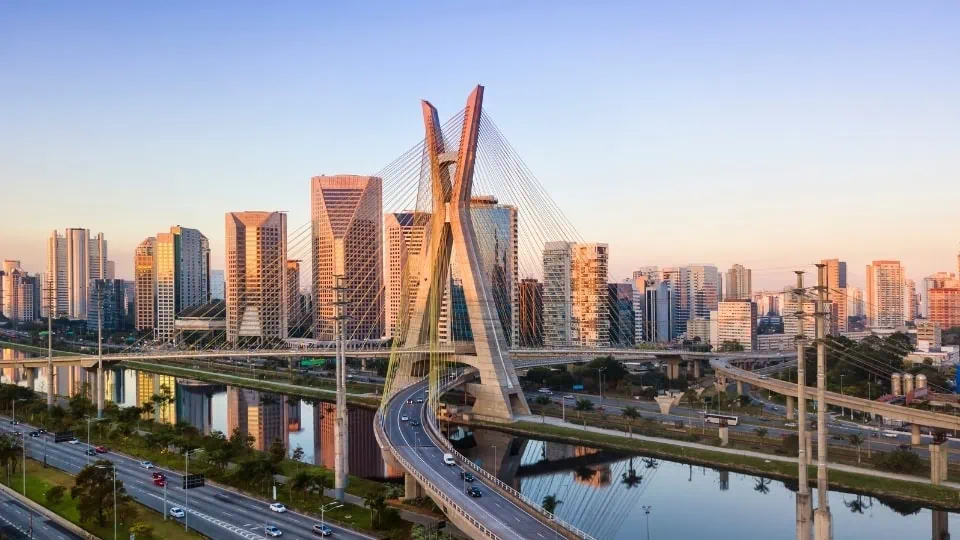
Many major cities have executive aviation. São Paulo has something closer to an ecosystem. One of the most distinctive Brazil facts for luxury travelers is that São Paulo is widely described as having the largest helicopter fleet among cities, supported by an extensive network of helipads and intense daily movement.

This is not just a fun statistic. It shapes how high-end life works in the city: timing, transfers, corporate schedules, and, increasingly, premium experiences that use rooftops and skyline access in creative ways.

What this means for travelers:

  • Transfers can be engineered around time, not traffic (especially for tight business and dining schedules).
  • Rooftops are not only viewpoints in São Paulo, they are part of the city’s daily rhythm.
  • Aerial perspective changes the narrative: São Paulo reads differently from above, as a vast, modern, textured metropolis rather than an abstract “big city.”

A detail that illustrates the culture: international reporting has highlighted São Paulo’s density of helicopters and helipads as part of the city’s everyday infrastructure.

If you enjoy cities like New York or London for their pace and access, São Paulo can feel unexpectedly familiar, just expressed through Brazilian scale.

São Paulo’s Art Scene Is Museum-Grade, Not “Nice For The Region”

Another non-obvious Brazil facts category: cultural capital. São Paulo is not a city where you “fill time” before flying to the beach. It is a destination for collectors, design lovers, and travelers who plan meals like events.

A single institution makes the point clearly: MASP (Museu de Arte de São Paulo) states its holdings include more than 11,000 artworks, spanning multiple continents and periods. This is not a small-city museum. It is a serious collection that can anchor a full day, especially if you enjoy curated, quiet luxury.

A quick “high-low” structure for a refined São Paulo culture day:

  • Morning: MASP or another major museum block (slow pace, private guide if desired).
  • Lunch: a long, reservation-based meal (São Paulo is at its best when you do not rush).
  • Afternoon: a gallery walk in a focused neighborhood rather than a scattered checklist.
  • Evening: a performance, or a chef’s counter that turns dinner into theater.
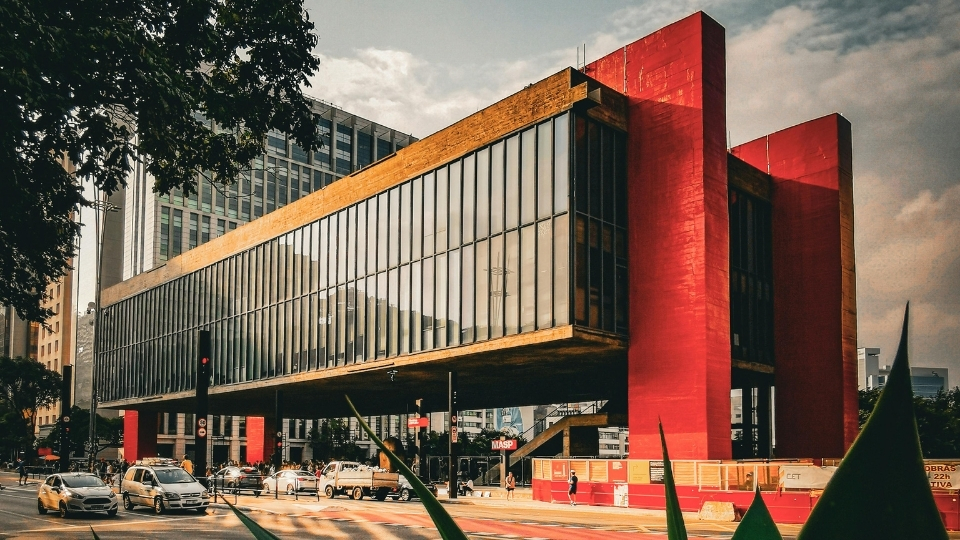
São Paulo Museum of Art (MASP) in Brazil, one of the country’s major cultural landmarks featured in luxury travel Brazil facts

This is how São Paulo becomes original, not repetitive: you treat it as a global cultural city, not as a supporting character.

Rio De Janeiro Has An Urban Forest Minutes From Luxury Neighborhoods

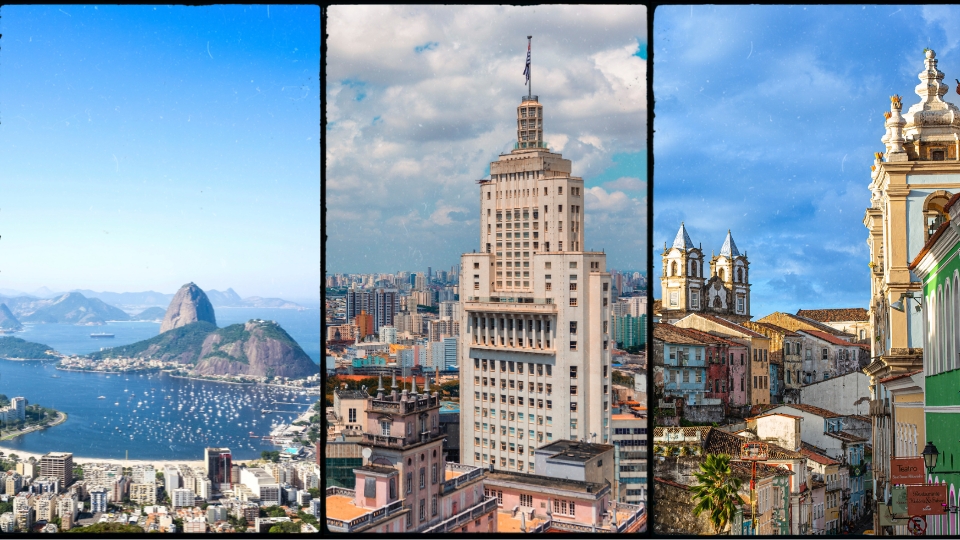
Rio de Janeiro’s beauty is famous. The detail that surprises many travelers is how quickly you can move from beach addresses to dense Atlantic Forest. Tijuca National Park is often described as the world’s largest urban forest, though the “largest” claim is debated depending on definitions.

Whether or not it is the single largest, what matters for the traveler is access. It is rare to have:

  • A world-class beach scene
  • High-end dining and hotels
  • And serious rainforest-like terrain

…all within the same city fabric.

Experiences that feel “impossibly close” in Rio:

  • A sunrise viewpoint that is not a long drive away, but inside the city.
  • Private nature walks that end with lunch back in Leblon or Ipanema.
  • Water, mountain, and forest in a single day without the feeling of a forced itinerary.

This is one of the most practical Brazil facts you can use: in Rio, you can plan nature without sacrificing comfort or time.

Brazil Is A Biodiversity Superpower And It’s Not Just The Amazon

Luxury travelers often say, “I’ll do the Amazon next time.” But biodiversity in Brazil is not a single-region story. UNEP describes Brazil as hosting 15–20% of the world’s biological diversity, which reframes the country as a global ecological heavyweight, not a one-biome destination.

Brazil’s own biodiversity reporting has also highlighted striking species counts, including figures like 55,000 plant species and extensive vertebrate diversity in national tallies.

A particularly compelling, high-end wildlife fact is the jaguar: National Geographic has reported that Brazil’s Pantanal, the world’s largest wetland, is home to around 5,000 jaguars, and is among the best places to see them in the wild.
How to translate this into a luxury travel decision:

  • If your priority is rare wildlife sightings, Pantanal often delivers higher odds than rainforest-first itineraries.
  • If your priority is lush landscapes and river life, the Amazon can be extraordinary, especially with lodge selection and guiding.
  • If your priority is short transit and maximum comfort, you can still have meaningful nature within Rio itself, as mentioned above.

This is the kind of Brazil facts knowledge that makes your itinerary feel intentional rather than aspirational.

A Jewelry-Level Brazil Fact: Paraíba Tourmaline Was Born Here

For travelers who love design, watches, and jewelry, this may be the most elegant Brazil facts story of all: Paraíba tourmaline, famed for its electric blue-green color, was first discovered in Brazil’s state of Paraíba in the late 1980s and became a modern phenomenon in colored gemstones.

Copper-bearing gem tourmaline… recognizable by its vivid neon blue to green color… was first discovered in the state of Paraíba… in the late 1980s.

This is not trivia. It’s a story you can weave into a trip through:

  • High jewelry shopping and ateliers (particularly relevant if you travel with collectors).
  • Design-focused experiences in São Paulo.
  • A deeper appreciation for Brazil as a source of globally significant materials, not only landscapes.

It also keeps your Brazil narrative sophisticated: you are not repeating beaches and landmarks, you are adding cultural texture.

    Brazil’s Coffee Influence Is A Numbers Game

    Coffee is often mentioned casually, but the numbers behind Brazil’s role are huge. Industry reporting tied to Brazilian coffee institutions has cited Brazil producing around 31% of global coffee production in a recent crop year framing.

    For travelers, this matters because it creates a coffee culture that is both everyday and elite:

    • In São Paulo, coffee can be treated like wine: origin, processing method, tasting notes.
    • In certain regions, private tastings and farm visits can be done with comfort-first logistics.
    • The “coffee story” becomes a refined daytime experience, not a souvenir stop.

    If you are building a luxury itinerary, coffee experiences are useful because they fit naturally between major “anchors” without adding fatigue.

    Brazil Has UNESCO Surprises Beyond The Famous Names

    Many travelers can name one or two Brazilian UNESCO sites, and then stop there. But Brazil’s UNESCO portfolio is broader than expected. UNESCO’s own country page lists 25 World Heritage properties for Brazil at the time of reference.

    And UNESCO’s official listing confirms Lençóis Maranhenses National Park was inscribed as a World Heritage site in 2024, a detail many repeat visitors have not caught up with yet.

    For luxury travelers, UNESCO recognition often correlates with:

    • Stronger long-term protection narratives
    • Increased international visibility
    • Higher demand, which affects availability for top lodging

    Aerial view of Lençóis Maranhenses National Park in Brazil, a UNESCO site often cited among the most surprising Brazil facts for travelers

    So this is a planning fact as much as a cultural one.

    A Cultural Brazil Fact That Shows Up In Food And Neighborhoods

    Brazil is often described as a cultural mosaic, but one of the most specific and visible examples is the scale of Japanese heritage in Brazil. Official trade and diplomacy material has cited about 2.5 million Japanese and descendants living in Brazil, described as the largest population of Japanese origin outside Japan.

    This is not a history lecture. It is a lived reality you can taste and walk through:

    • Neighborhoods like Liberdade in São Paulo
    • Japanese-Brazilian culinary crossovers
    • A broader understanding of São Paulo as a global, immigrant-built city

    A luxury trip becomes more memorable when the “why” behind a place is as strong as the “what.”

    Final Thoughts

    The best Brazil facts do not compete with the country’s famous images. They sharpen them. They help you plan smarter days in Rio de Janeiro, approach São Paulo with the right expectations, and choose nature experiences based on what you actually value: sightings, comfort, pace, or story.

    If you want more cluster articles like this one, with planning insights and curated curiosities designed for discerning travelers, consider subscribing to our newsletter.

    FAQ

    Scroll to Top